
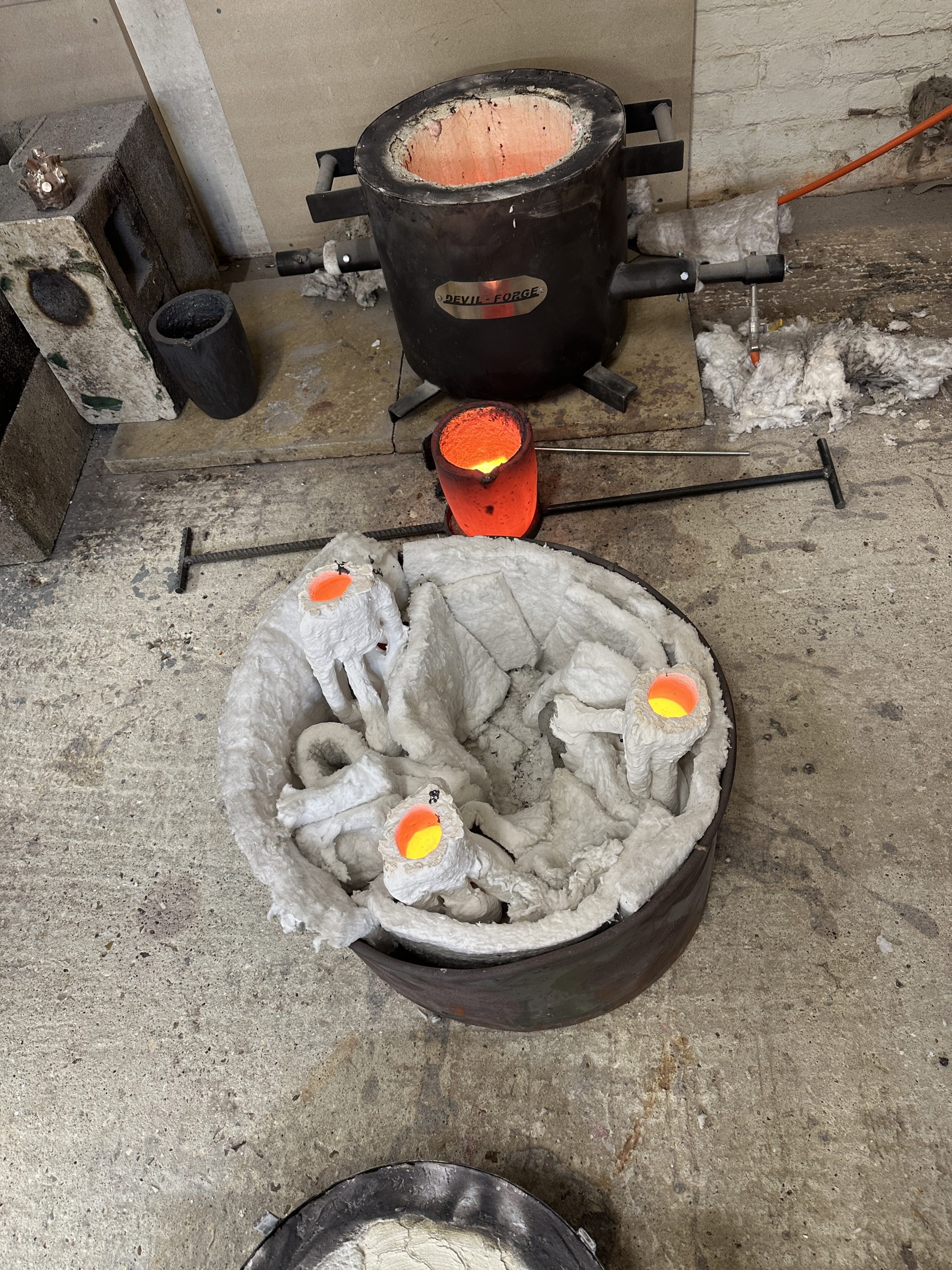
THE LOST-WAX PROCESS
Lost-wax casting, or cire perdue, is one of the oldest and most precise methods of creating metal sculpture. The process has been used for thousands of years, with examples found across ancient civilisations and continuing through the Greek and Roman worlds, the Renaissance and into modern foundries. The famous Benin Bronzes, for example, were created using lost-wax casting, demonstrating just how much detail and complexity this technique can achieve.
Although the tools and materials have evolved, the fundamental process remains remarkably unchanged. At Bronze Art Workshop, we follow this traditional method while combining it with modern materials, equipment and foundry expertise.
1. THE ARTIST’S ORIGINAL
The process begins with the artist’s original sculpture, model or pattern. Depending on the size, shape and material of the original, a carefully designed mould is created around it. This is a critical stage, as the mould must capture every detail of the artist’s work while allowing the original to be safely removed.
Silicone rubber and specialist mould-making materials are commonly used to create a flexible, detailed mould. For larger or more complex sculptures, the mould may be constructed in several sections, supported by a rigid outer jacket. Once complete, the original sculpture is removed, leaving a precise negative impression from which a wax replica can be produced.
2. WAX MODEL
Molten wax is introduced into the mould to create a hollow wax replica of the original sculpture. Once removed from the mould, the wax is carefully inspected, assembled where necessary and finished by hand to reproduce the artist’s original in every detail.
The quality of the wax is vital because it is the direct pattern from which the final bronze will be cast. Any detail or refinement in the wax can ultimately be reflected in the finished sculpture.
3. SPRUING & GATING
A carefully designed network of wax sprues, runners and vents is attached to the wax model. These channels create the pathways through which molten bronze will flow into the mould and allow air and gases to escape during casting.
The positioning and size of this system are carefully considered for each individual sculpture to give the best possible chance of achieving a successful casting.
4. CERAMIC SHELL
The wax model is enclosed in multiple layers of specialist ceramic investment to create a strong mould capable of withstanding molten bronze. Each layer is built up carefully, allowing the ceramic material to capture the fine detail of the wax.
Once the shell has reached the required thickness and strength, it is allowed to dry before moving to the burnout stage.
5. BURNOUT
The ceramic mould is heated in a kiln, causing the wax to melt and drain away. This leaves behind an exact hollow cavity in the shape of the original sculpture — hence the name lost-wax casting.
The mould is then prepared and heated to the correct temperature ready to receive the molten bronze.
6. CASTING
Bronze is heated until molten and carefully poured into the prepared ceramic mould. The metal flows through the sprue and runner system, filling the cavity left behind by the lost wax.
Once the bronze has cooled and solidified, the ceramic shell can be broken away to reveal the raw casting.
7. BREAKOUT & FINISHING
The ceramic shell is carefully removed and the bronze casting is separated from its sprues and runners. The surface is then chased and refined by hand, removing casting marks and restoring the fine details of the sculpture.
Any necessary repairs or adjustments are carried out before the surface is prepared for its final finish.
8. PATINATION
The final stage is patination. Carefully applied chemicals and controlled heat are used to develop the desired colour and character of the bronze surface.
The finished sculpture is then cleaned, protected and prepared for the artist or client.
A TRADITION THAT CONTINUES TODAY
What makes lost-wax casting so remarkable is that, despite its ancient origins, this is fundamentally the same process used in our foundry today.